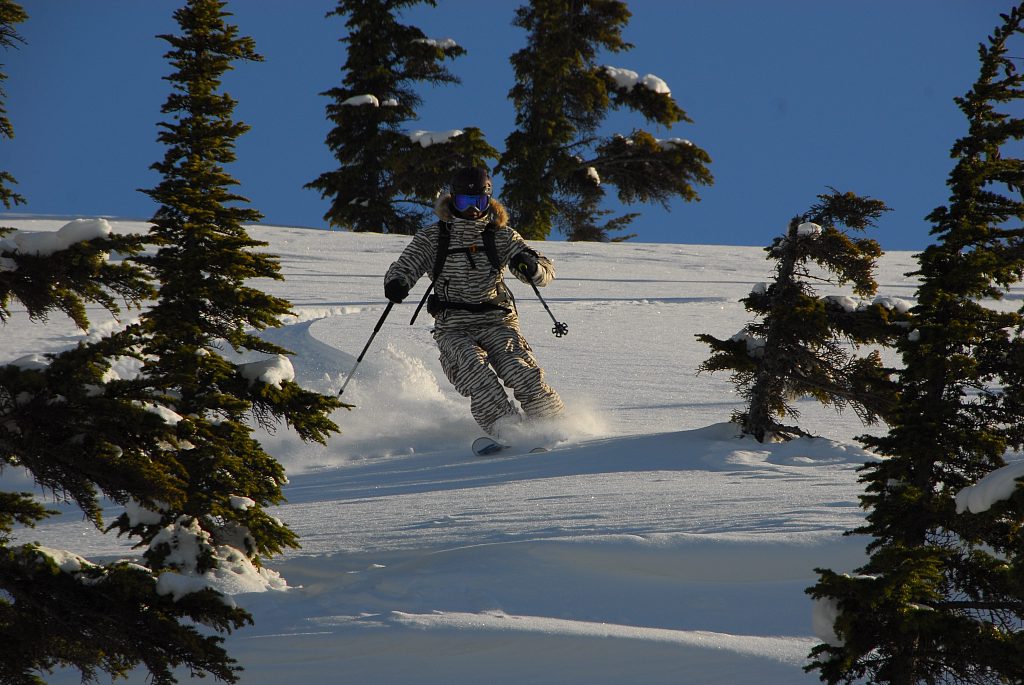
--依个人感觉的舒适与否而定,国内外教练们的主张也是因人而异。
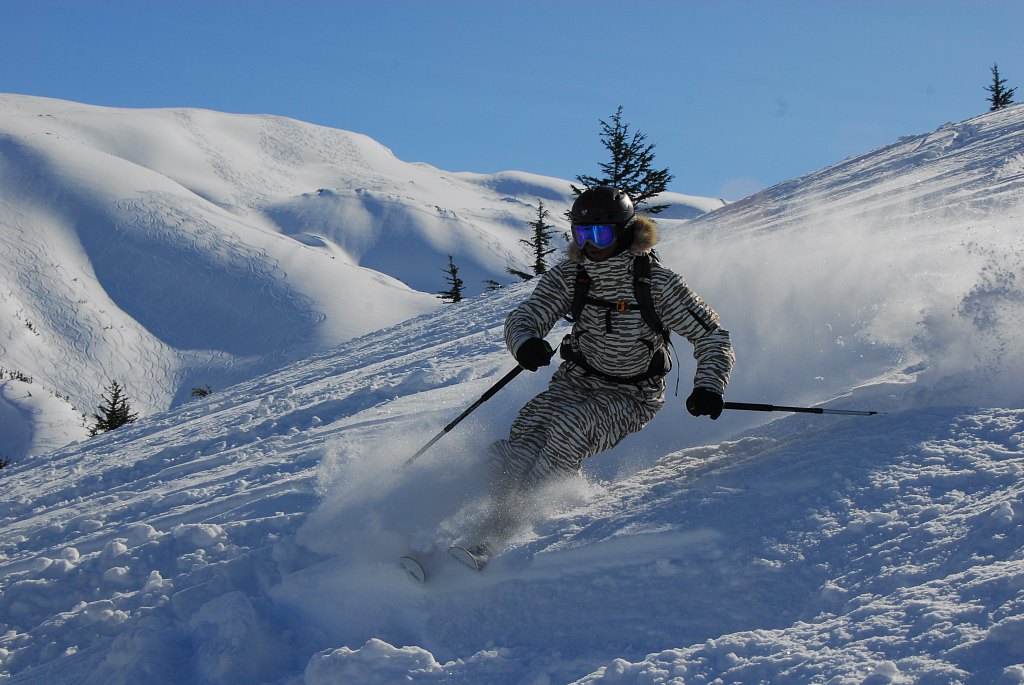
还有,你偏好哪种转弯的轨迹。如果喜欢一扭一横的“Z”形角弯,身体(上身)就随板尖转动;反之,如果喜欢柔滑的“S”形圆弯,上身就大体面对滚落线(通过肩、髋关节相对于板尖运动方向的反旋来实现)。初中级雪坡比较宽容,怎麽耍都行。
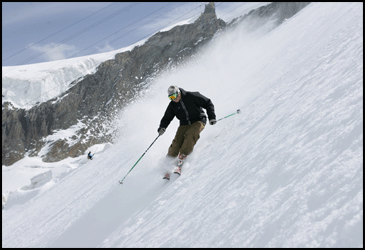
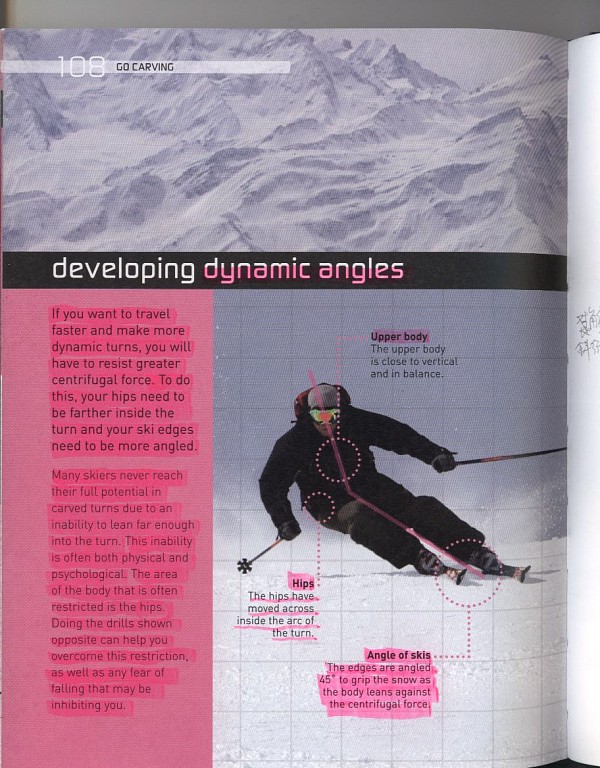
真正的陡坡、极陡坡上,每个滑雪者个人对上半身要不要“转来转去”,态度就要严肃一点了,毕竟关系到滑行的稳定与安全。按照R.MARK ELLING滑雪教科书的观点,如果头部和上身不是面朝山下而是跟着雪板转向弯内,后果会是外板(山下板)失去压力或滑雪者被扔出去--“A llowing the head and upper body to lean toward the hill,or toward the inside of the turn,can cause pressure to be transferred away from the outside ski,causing it to lose edge grip,or blow out.”(《THE ALL-MOUNTAIN SKIER》SECOND EDITION,P140)
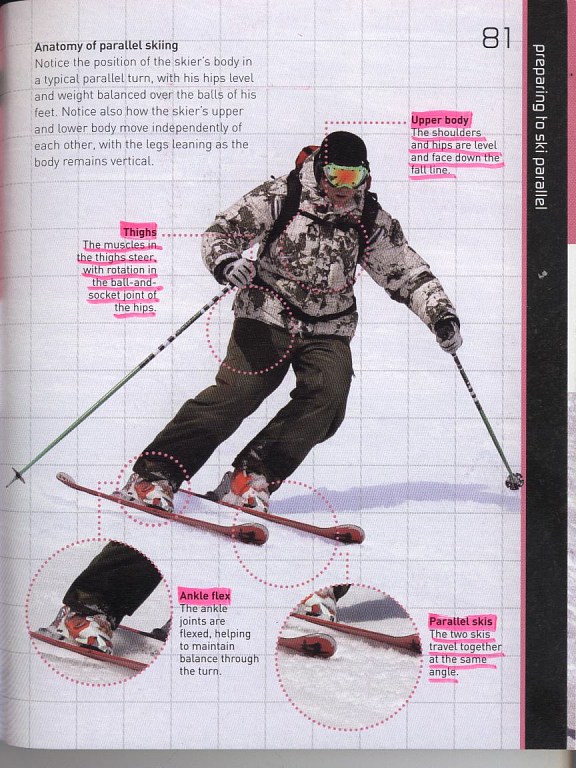
WARREN SMITH的滑雪研究院2006年出版并在欧州、北美、南美和亚洲部分国家销售发行的滑雪教程也是这种主张:“上身--左右肩关节和左右髋关节保持水平状态并面对山下滚落线。”(《GO SKI》P81图解)
该院就“上身面对滚落线”的动作要领发布了一小段视频,很直观并基本符合兄台的主张:))链接如下:
http://www.warrensmith-skiacademy.com/online-tips/online-tips_Carving_Controlling-Body-Rotation.htm
1276225402,露水
INCREASE LEG STEERING RANGE - DECREASING UPPER BODY ROTATION
Most skiers get told one time or another by a coach that there is too much upper body or hip rotation in their skiing. This usually gives the skier a weaker edge support in the turn and poor body positioning over the skis. The Result ? A vulnerable and weaker set up for overall dynamic balance. Upper body or hip rotation is usually more apparent in one direction. Steering needs to come mainly from the legs with the ball of the thigh bone rotating inside the socket joint of the hips. This allows the hips to remain generally facing in the direction of the fall line.
In most cases skiers can step their feet around approximately 50 or 60 degrees across either side from the fall line. This means that when they steer from turn to turn and the steering of the skis is greater than say 50 or 60 degrees, the upper body will start to rotate as the skis try to achieve 75 degrees and 80 degrees of angle across the fall line (this is typically what’s needed of steeper slopes). The reasons for a poor leg steering range are:
a. General tightness in the hips
b. Lack of range in exterior and interior leg rotation
c. Many years skiing without finishing off of the turn shape
Solution is
a. Attend a yoga workout class, buy a yoga DVD or see a physio to help you gain a better range of flexibility in the hips
b. Static leg rotation dry land exercise
This exercise below helps improve your awareness of your leg steering range and capability. Once you can measure you range off of snow you'll know what you're capable of on snow. You'll also be able to identify the turn direction that has a lack of range of steering. No matter what type of turn your making, you nearly always want the steering to come mainly from the legs. If you’re getting it right, the ball of the thigh bone rotates inside the socket joint of the hips. From this correct way of steering you'll a get stronger edge hold in the turn. Try to make your turn shape like semi circles meeting semi circles, S shaped turns as opposed to Z shaped turns.
In the Static Leg Rotation exercise test the range at which you can steer your legs without rotating your hips. To do this simply stand with your hands on your hips bones. Use your hands to stabilise your hips and start to step your feet around. Keep stepping until the point where you feel you can't step anymore without your hips moving around. This is your limit. When you get to your limit try to measure the degrees of steering range across the fall line from zero to 90 degrees. In an ideal world for skiing you would want to be able to step around 90 degrees in each direction. This would mean that you can steer in each turning direction without any tension in the hips stopping the upper body from rotating. The average in most skiers is to step around to approximately 50 or 60 degrees. It's common that most people have one side they can step around more than the other and this is usually a starting point at identifying the weaker turning direction even before a skier puts their skis on. Make a note of your stepping around range and try to better it over several weeks of monitoring.
c. Try to finish your turns off and make the turn shape like semi circles meeting semi circles, S-Shape turns
The result is an increase in the range of leg steering allowing the skier to steer to greater angles without the upper body rotating, leaving the skier with a stronger edge hold and greater leg steering strength at the extremities of each turning direction.